
Above the Fold: October 20, 2025
BY ROB BEELER
Please note that this information is confidential and intended for the internal use of our partners only. The Above the Fold Report is an amalgamation of the discussions taking place within the Beeler.Tech universe. Much of what is presented is based on conversations held behind closed doors within the last week. The topics will range from the existential threats to publishers down to questions about how to use a specific feature in an ad server. We believe that if you are a publisher or someone who works with publishers, all of these provide opportunities to help or learn. The format of the report changes as the conversations change.

Quote of the week:
“The tech should have been what got commoditized. Instead, it’s the publishers who are now being commoditized.” – Jana Meron, LinkedIn Post

Events
- October 21 | Toronto | Trenches Of AdTech Toronto
- October 21 | Virtual | Relevant Digital How Publishers Can Leverage AI for Ad Monetization! – Register here: https://lnkd.in/daxraSFr
- October 22 | London | Publisher Perspectives: The Next Episode
- October 22 | New York | Wunderkind CTV Fireside Chat

The Trade Desk
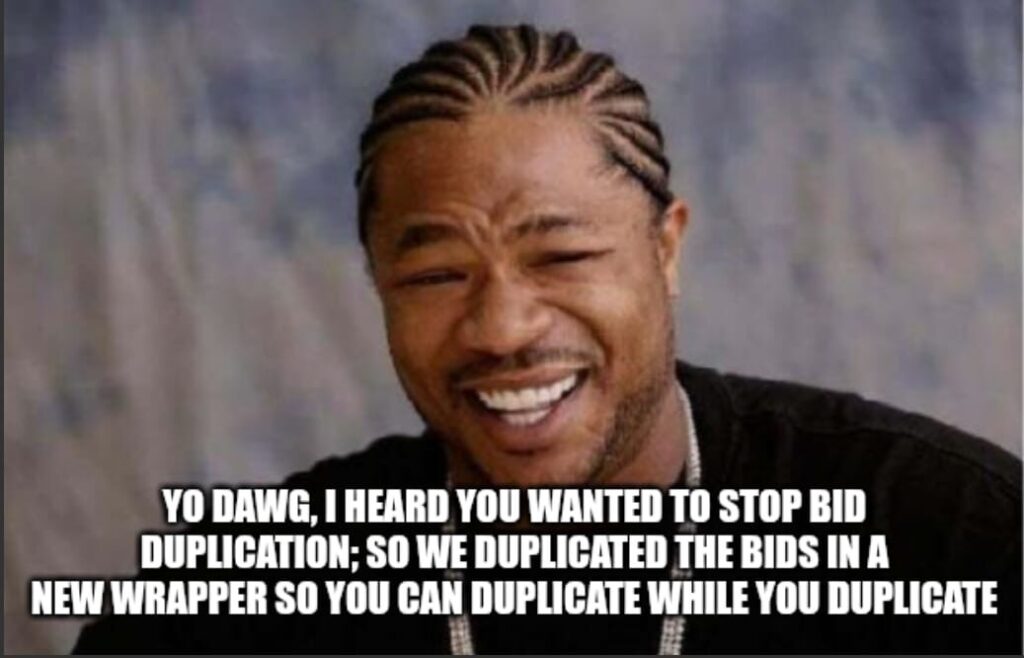
A mixed bag of responses this week about OpenAds, and some of it stemming from understanding what OpenAds will do for publishers and where it sits. We’ll work on pulling resources together to help educate everyone, but until then, just reporting some of the reactions, questions, etc. that are coming up:
- “If you really want to help pubs, how about you stop intentionally bidding below the floor, especially flooding me with bids at $0.01, because that is throwing off my bid spectrum analysis, forcing me to discard all values at a penny.”
- “I’m gonna hold tight and see what happens in the next 6-8 weeks.”
- “We are going to at least try it on a mid-size domain. If it pans out as they claim, likely to drive some revenue by simplifying the chaos from DSP to publisher.”

Privacy Sandbox
Not much discussion about the Privacy Sandbox announcements within the community (late in the week and there hasn’t been a lot of activity about this topic in some time. It would be interesting to hear if anyone is going to continue to leverage the features that will continue to be supported. Links: Privacy Sandbox Blog Post. CMA announcement to release Google from the Privacy Sandbox commitments. Privacy Sandbox features status page.

Agentic Advertising at Base Camp Lisbon
Scope3 reached out about speaking at Lisbon to discuss AdCP and agentic advertising. We already have a session on the agenda to discuss agentic advertising, but should we replace the publisher discussion with a Scope3-led presentation? I rearranged the schedule, and we will have both, but I wanted to share the results of asking publisher attendees and some of their comments:
- 63% want Scope3 to come in and present
- 34% want to talk about agentic advertising without Scope3 in the room
- 3% agentic advertising is not something I’m interested in.
—
- Nothing against scope3, but I want to have a closed-door, honest convo with publisher leaders about what agentic advertising really means from the pros all the way to the cons. There’s a lot of tough stuff that comes with that convo, and I’d fear a pitch may change it.
- I believe the pub convo is really invaluable.
- I think most publishers don’t understand what it means or who it will potentially disintermediate. I think having Scope3 come and explain it to us makes sense.
- Love to know how agentic advertising fits in with their carbon consumption stance. Anything with AI in it seems to be a bit of a coal muncher!
- I may not agree with them, but I would like to hear what they have to say
- I’d hate for the conversation to be swayed in a heavily biased way towards Scope3’s offering – equally, I am sure they’ll have a number of valid POV’s and perspectives on this subject.
- With all due respect to Scope3, the Agentic Ads space is a dime a dozen right now. The visions are all a derivative flavor of, “models can execute faster and more deterministically than humans, so they should do it.” I generally agree with the vision, but the execution from the platforms I’ve played with is anything but deterministic or effective, whether programmatic or performance. If we are focused on publishers, I would rather we discuss how the buy side transforms, but with an unbiased/unconflicted speaker rather than someone who has a huge vested interest in the space.
- I’d be curious what a company with an actual developed product has to say. My thinking is that it would be more to the point than discussing visions and potential probabilities.
- I’d like to hear more from Scope3 so we can plot our course in the future, which is likely a Starbucks Barista for me. LOL
- I followed the protocol launch webinar, and it’s not surprising to hear that Scope3 is trying to get a seat at the table to promote the framework. They need to get traction from the supply side and reach a critical mass.
- I think there are bigger fish to fry atm, however, it’s always good to keep an eye out for what’s next, and given how things are shaping up, this could well become a new revenue channel in the next 3/5 years, provided they can get enough demand to back it up.
- I’d be interested in Scope3 joining to share their perspective. We’ve been looking closely at AI and advertising at our company, so it’d be useful to understand how agentic ad models align with some of our AI Principles regarding transparency, accountability, and data stewardship.
- Some of the things I’d be interested in hearing are:
- How buy-side agents are trained and how publisher data is governed, licensed, or protected
- How human oversight and accountability are built in – who’s responsible when agentic systems get it wrong
- How transparent or auditable these agents are, and whether publishers can see why certain inventory is prioritised or rejected
- How do they ensure agentic decision-making doesn’t unintentionally devalue hard news or controversial topics under brand safety?
- Given Scope3’s sustainability focus, how environmental claims are verified, including the energy cost of the AI itself
- Some of our recent Perplexity issues around content use and attribution underline why clarity and governance really matter for us, so hearing Scope3’s view on those points would be timely.
- I don’t see publishers being the drivers (in isolation) of this change. Hence, a conversation ONLY among publishers, in my view, would be inadequate for us to get a grasp of how we adapt to this paradigm shift in the way advertising will be bought/sold in the foreseeable future.

Amazon
Conversations continue as Amazon makes changes to its working relationship with publishers. A really good question was asked: Have your SSP partners, which run via TAM, commented on this at all? Someone shared that they had, and the SSPs assumed that the publisher had turned them off, not TAM. However, the SSP’s attempt to get the publisher turned back so far has failed. Publishers are moving their connections through TAM to other places, like Prebid server.

Bad Ads
There was a period when weeks would pass without any discussion of ad quality or reports of bad ads from publishers. It is now happening weekly, and publishers are playing a game of whack-a-mole, even if they have security in place. This week, a creative was being served that linked to an Amazon page. Amazon couldn’t help. A fellow publisher provided some insight but was only able to narrow down the sources to IponWeb, Kargo, Ozone, TTD, Vidazoo. It’s hard for publishers to shut down revenue sources just to try to isolate one bad ad.

Programmatic Topics
- Mobkoi: a pub seeing large discrepancies with the numbers. Another pub said they build their ads using Celtra, and they had impression discrepancies with them in app browsers. Issues with serving within AMP environments also came up.
- Someone testing programmatic channels on display without GAM reported a lot of uplift and huge speed gains, and will continue to test. Someone else mentioned they tried this approach in the past, but so no real lift.
- When setting up preferred and private deals, do you typically rely on Google as your primary platform, or do you replicate deals across multiple SSPs (e.g., Magnite, Index, Xandr, etc.) to capture additional demand, or are you more selective? If so, why?

Human
A question to the group about who is using Human as an IVT vendor. Someone mentioned Cheq as a cheaper option. Forensiq was also mentioned as a past solution. Someone shared they use Human because of TTD and DoubleVerify for the rest. This conversation branched into a few directions:
- If you use Human through TTD, you’re not considered a client and only receive limited reporting and support. If Human marks pub inventory as invalid, the pub can’t reverse this. Someone shared that you have to have TTD advocate for you and provide them with data from other sources to prove your inventory is being misrepresented.
- But is Human worth it as a solution outside of TTD? The people weighing in were skeptical.
Temu Spend/Quality
Reports of big pullbacks by Bytedance and Temu over the past weekend. One pub reported a 30-45% drop from the previous week. Someone else is reporting seeing 0% coming through AdX, but still appearing through other SSPs like Pubmatic.

Questions of how to control Temu’s ad quality came up. One response: their good-quality brand ads come through Google Ads accounts or reputable DSPs. All the sketchy stuff comes through DSP = Whaleco or Temu DSP2.

Anyone?
Does anyone know of any vendors that can handle the initial implementation of a Prebid wrapper? We are considering Demand Manager, but our dev team lacks the bandwidth and is not familiar with ad tech setups.

Does anyone have experience with Native in-app ads versus running webviews for the app? I am interested in knowing what kind of CPM differences you typically see between the two integrations.