

5 Year Plans Do Exist (June 15, 2026)
BY ROB BEELER
During his keynote session at Navigator London, Anthony Hitchings talked about how he models things out 5 years into the future, as a company. There is a revenue and margin goal that has been decided from up top, and (with his model) he helps map out what traffic declines, changes in subscriptions, new products and help add up to that number. If the numbers don’t add up, changes happen.
My guess is almost every publisher CEO has this 5-year number. I doubt many share that number but instead the CFO breaks it down into annual and quarterly numbers and that’s what people work to.
Often then this is translated into simply: “make as much revenue as you can,” and this is when things, in my opinion, break.
Our industry will go through so much change in the next couple of years that a 5-year plan sounds impossible. After Anthony’s session, I’m more convinced that it is essential. Not knowing what the future brings is not a business plan. Not knowing means you don’t know what or who you are at your core.
Your audience, your advertisers and your people won’t know whether you are in it for the long haul.
Pro tip: I don’t care how low you are in the organization, but if you can get time with your CFO or someone at that level, learn what the vision is and then create your own models that you can share with them. Five year goals are met one impression at a time.
Beeler.Tech doesn’t quite have a 5 year plan to be honest but we are working on it.
I will say that we’ve already committed to locations for Base Camps through 2027 and into March 2028. Deposits have been made. Why? We believe in publishing. We believe in our community. We’re here and will be here through hell or high water. We have to evolve to deliver on our mission and with every conversation we help create, get one step closer. Mars 2030, anyone?

Here’s the latest:
- When GPID is messy, publishers pay the price
In this exclusive conversation, Eilon Goldstein of Rise gets into what GPID was meant to solve, where implementations tend to go sideways, and what publishers should look at first if they want to know whether their setup is helping or hurting them. - Manual reporting is costing ad ops teams more than time
Manual reporting may keep teams close to the numbers, but it also asks experienced people to spend their best hours searching for problems instead of solving them. In this conversation, we get into why those workflows have persisted, where the low-value work tends to concentrate, and what publishers lose when detection depends on a reporting cycle. With Chris Quinn of ProOps Consulting. - Why GPID still falls short: Persistent problems in programmatic placement identification
In theory, GPID solves a core pain point: without it, the same ad slot can appear with varying identifiers across SSPs, wrappers, and reseller paths. Yet despite widespread adoption, real-world implementations often introduce variations that undermine GPID’s core promise: persistence. By Eilon Goldstein of Rise.
Want to get caught up on everything we’ve published? Start here.

The Stack subscription is built for people on the business side of publishing who need more than recycled industry headlines. You get a clearer read on the pressures shaping publisher decisions right now that don’t always show up in public conversations.
Here’s what you’ve missed:
- Subscribers only: How to bring buyers closer to the impression
Until now, the industry’s mistake has been assuming the best answer comes after the impression has traveled downstream. That assumption made sense when third-party cookies did the heavy lifting, the sell side had very little time to act, and the buy side held most of the decisioning power. But it holds less now. (New from Hazel Broadley) - Subscribers only: Above the Fold (June 8, 2026)
Six large publishers (Condé Nast, Time among them) told Digiday how they’re shifting from impression-based pitches to direct-sold custom content, products, and events as Google search referrals tank - Subscribers only: What ‘intent’ means in 2026, and why the machines won’t wait for your product to catch up
Intent has been treated as a targeting label rather than a human truth. The gap between the two is where publisher revenue leaks, buyer trust erodes, and campaigns quietly underperform. (By Hazel Broadley of Beeler.Tech)

Here’s what you need to know this week…
- Base.Camp La Jolla planning is well underway! And we’re excited to announce that the one and only Joanna Bloor will be joining us as a keynote speaker. Joanna is a “potentialist” who helps individuals and teams see what’s possible before whatever you’re building has a name, a plan, or even buy-in. So, if you’re someone who wants to understand how to better move people from “sounds interesting, I guess,” to “we need to act on this right now,” we hope to see you in California this October.
- Did you miss Navigator NYC? You can now view session replays on YouTube from Justin Evans, Dr. G (first session, second session), as well as Rich Murphy and Lindsay Horrigan.
- We’re thrilled to share that Digital Day Camp was named on NABS Canada 2025 Generous List. Only a total of 37 organizations donated to the industry charity last year. We’re proud of this inclusion because supporting critical industry resources is just as important as driving conversation about our industry’s future.

A full list of our 2026 events we’re involved in, all in one nice little package:
- Navigator London – June 9, 2026
- Base.Camp La Jolla – October 4-7, 2026
- Digital Day Camp: Leadership – October 21, 2026
- Digital Day Camp: Next – October 22, 2026
- Base.Camp Madrid – November 8-11, 2026

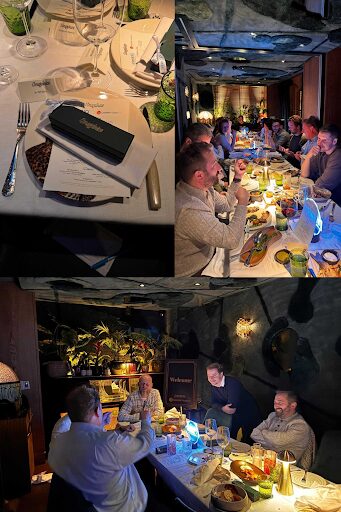
A great dinner was had by all attendees the night before Navigator London. Thanks Intent IQ.
Cannes 2026 Calendar
Each year The Digital Voice creates a robust Cannes calendar. For those attending, worth a review. Get the Cannes calendar here!
Join the Community!
Thousands of professionals, of all ages, worldwide turn to Beeler.Tech as their meeting place for all things publisher revenue operations. Join the Beeler.Tech Community here! Your teams and colleagues are welcome, too.
Join the Women’s Space
Our Women’s Space continues to grow, and we’re developing a Code of Conduct for all Beeler.Tech events: something every attendee will agree to, and something we hope the wider industry adopts. The goal is simple: raise the bar on respect and professionalism for everyone. We have a Slack channel and a WhatsApp group. The WhatsApp chat is more active, but you’re welcome in either (or both) if you want to be part of the conversation.
Please reach out to Melissa if you would like to join one or both.
Looking for your next opportunity? Know someone else that is?
Check out our job board. Also – sign up for our Jobs Newsletter (delivered every Thursday). Subscribe here.
Team.Beeler Out