

Free Soloing an Unknown Mountain (June 8, 2026)
BY ROB BEELER
People who climb a thousand feet of rock with no rope are among the most prepared humans alive. Alex Honnold went up El Capitan with nothing but chalk because he had already rehearsed every hold a hundred times, until the rope became a thing he no longer needed. The preparation was the safety equipment.
We’re free soloing too, but our wall has a cruelty Honnold never faced. Not only have we never climbed it before, it also keeps changing shape while we’re on it. And you can’t rehearse holds that don’t exist yet.
This came up on a call with pubs this week, simply to discuss how everyone was feeling with everyone going on: “I struggle with what we can actually do.”
How do you prepare for a climb when you can’t see the route?
Not with a step-by-step plan. A plan is a list of moves, and it only works if the wall stays put. The first time a hold crumbles, your plan is just directions to a place that’s gone.
Anthony Hitchings at the Financial Times carries something better: a model. Instead of a planned sequence of moves, he operates from a working theory of how his wall behaves. He feeds it his real numbers, and it tells him where the holds are. When the world shifts, he doesn’t tear up a plan. He changes an input, and the model redraws the route.
A plan tells you the moves. A model tells you how to find new ones when the wall moves first. Anthony will share his approach tomorrow at Navigator London.
Rory Latham at WPP is also speaking at Navigator London, and I say he has more than a model. He has a mission. If a model is an instrument, a mission is a compass, and on a mountain you’ve never climbed, a compass beats a map every time.
Rory’s points are one way: get real information into the hands of brands so money moves with trust rather than suspicion, and fix the unglamorous plumbing instead of blowing it all up. When the wall throws him something he’s never seen, he doesn’t freeze hunting for the missing step. The mission tells him which way to reach.
So that’s the climb: no rope, a face nobody has mapped, and the only fatal move is freezing.
You don’t survive it with a memorized sequence. You survive it with an instrument or a compass, something that adapts when the rock does. Scratch developing a playbook unless it is written in pencil.
One last thing, because free soloing is the loneliest picture in all of sport. One person, one wall, nothing else. But climbers are a famously tight tribe, and they trade something they call beta, the hard-won knowledge of how a route actually goes.
You climb it alone, but you never have to figure it out alone.
That’s what this community is for.
PS. Don’t look down.

Navigator London is officially sold out! But as we pivot our attention to the rising temperatures of the summer months (and hopefully some well-deserved time off for many of you), don’t forget to start making your plans for the fall.
Base.Camp is returning this fall to La Jolla in October and Madrid in November, and here’s why one of our community members says Base.Camp is a must-attend event:
“Beeler.Tech Base.Camp is always at the top of my list of must-attend conferences – honestly, when budget is tight, it IS the list. There is no beating the conversations with the publishers and ad tech partners that attend.”
If you’re interested in attending and want to start a conversation with us about getting you to Base.Camp this fall, raise your hand. The earlier you raise your hand, the better.

Here’s the latest:
- Manual reporting is costing ad ops teams more than time
Manual reporting may keep teams close to the numbers, but it also asks experienced people to spend their best hours searching for problems instead of solving them. In this conversation, we get into why those workflows have persisted, where the low-value work tends to concentrate, and what publishers lose when detection depends on a reporting cycle. With Chris Quinn of ProOps Consulting. - Why GPID still falls short: Persistent problems in programmatic placement identification
In theory, GPID solves a core pain point: without it, the same ad slot can appear with varying identifiers across SSPs, wrappers, and reseller paths. Yet despite widespread adoption, real-world implementations often introduce variations that undermine GPID’s core promise: persistence. By Eilon Goldstein of Rise.
Want to get caught up on everything we’ve published? Start here.

The Stack subscription is built for people on the business side of publishing who need more than recycled industry headlines. You get a clearer read on the pressures shaping publisher decisions right now that don’t always show up in public conversations.
Here’s what you’ve missed:
- Free preview: Publishers: ‘failing fast’ only works if somebody’s writing it down
I’m tired. A lot of my friends in ad ops are tired. We keep being asked to absorb the same preventable problems on behalf of organizations that have decided learning isn’t worth the time it takes. (New anonymous publisher op-ed with Liz Moorehead) - Subscribers only: What ‘intent’ means in 2026, and why the machines won’t wait for your product to catch up
Intent has been treated as a targeting label rather than a human truth. The gap between the two is where publisher revenue leaks, buyer trust erodes, and campaigns quietly underperform. (By Hazel Broadley of Beeler.Tech)

Here’s what you need to know this week…
- THIS THURSDAY (6/11): Our friends at Playwire are hosting a webinar and Q&A on their State of Publisher Ad Revenue 2026 Report. For more context, check out Rob’s exclusive interview with Playwire’s Scott Schroeder about this report and its findings, and how the metrics many publishers are prioritizing may not drive revenue.
- Rise recently announced the launch of Agentic Bid Enrichment, an AI-powered intelligence layer that generates real-time intent signals on bid requests, including traffic with no user identifiers. Early results show CPM lifts of up to 3x on previously unclassified and generic inventory.

A full list of our 2026 events we’re involved in, all in one nice little package:
- Navigator London – June 9, 2026
- Base.Camp La Jolla – October 4-7, 2026
- Digital Day Camp: Leadership – October 21, 2026
- Digital Day Camp: Next – October 22, 2026
- Base.Camp Madrid – November 8-11, 2026

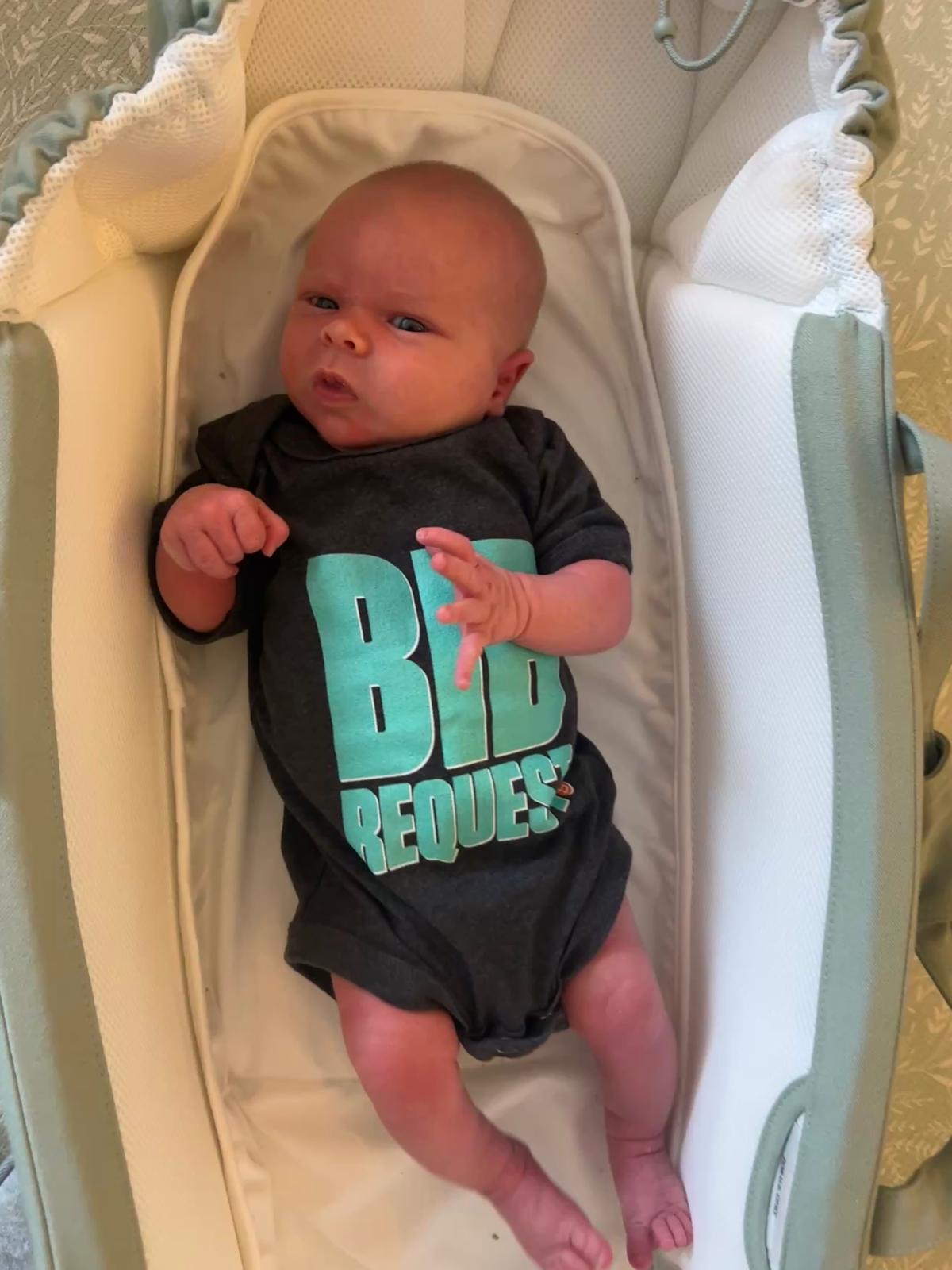
Welcome to the community, Alba Poppy Spears!
Cannes 2026 Calendar
Each year The Digital Voice creates a robust Cannes calendar. For those attending, worth a review. Get the Cannes calendar here!
Join the Community!
Thousands of professionals, of all ages, worldwide turn to Beeler.Tech as their meeting place for all things publisher revenue operations. Join the Beeler.Tech Community here! Your teams and colleagues are welcome, too.
Join the Women’s Space
Our Women’s Space continues to grow, and we’re developing a Code of Conduct for all Beeler.Tech events: something every attendee will agree to, and something we hope the wider industry adopts. The goal is simple: raise the bar on respect and professionalism for everyone. We have a Slack channel and a WhatsApp group. The WhatsApp chat is more active, but you’re welcome in either (or both) if you want to be part of the conversation.
Please reach out to Melissa if you would like to join one or both.
Looking for your next opportunity? Know someone else that is?
Check out our job board. Also – sign up for our Jobs Newsletter (delivered every Thursday). Subscribe here.
Team.Beeler Out